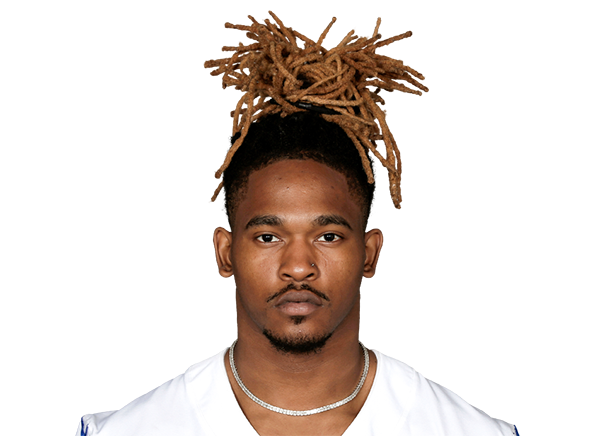
Player photos courtesy of ESPN.
Loading...
Loading...
We use cookies for analytics and advertising to keep TheFantasyPicks free. These run by default; you can opt out anytime with Reject or via Cookie Settings. See our Privacy Policy.
Player photos courtesy of ESPN.
Ranking moves, risers and fallers, and new posts. Free, no spam, unsubscribe anytime.
Every week somebody's stock drops and the timelines fill with hot takes before anyone actually checks the depth chart. This is the antidote: three real names trending the wrong direction, a diagnosis for each, and a clear hold/drop/trade call. No vague "worth monitoring" filler, just what changed and why it matters.
Dowdle sits second on Pittsburgh's depth chart, directly behind Jaylen Warren. That ordering matters because it is not a two-man committee with a clear lead back who occasionally rests. It is a stacked room: Eli Heidenreich and Kaleb Johnson sit third and fourth, meaning Pittsburgh has four bodies in the room and Dowdle is currently the second name on the depth chart, not the first.
The diagnosis here is scheme pecking order, not noise. When a backfield already lists a clear lead back ahead of you and two more names below you, a slow week is not randomness, it is exactly what the depth chart predicts should happen more often than not. Unless something forces Pittsburgh to lean on Dowdle over Warren specifically, treat every good Dowdle week as the outlier and every quiet one as the baseline.
Verdict: Hold in deep leagues where handcuff value matters, but do not chase him as a starter. If a trade partner overpays off name recognition, sell. In shallower leagues he is a legitimate drop candidate behind three other backs on the same roster.
Pickens landed in Dallas as the LWR2, which puts him behind CeeDee Lamb at RWR1 on the Cowboys' receiver chart. That's not a marginal gap in name value, Lamb is a top-10 overall fantasy asset and the unquestioned first read for Dak Prescott in this passing game. When a team's target competition includes CeeDee Lamb, any efficiency dip is more believable as "the ball simply goes elsewhere in obvious game states" than as an injury flag or a benching.
Dallas is also one of the more talked-about correlated stacks this year, with Dak Prescott, Lamb, Pickens, and Jake Ferguson all appearing together in combined-boom-rate models. That tells you Pickens still profiles as a piece of a good offense, just not the featured piece. A down week from the LWR2 slot behind an alpha WR1 is closer to schedule noise than a real signal.
Verdict: Hold. His WR2 rank inside this specific offense caps the weekly ceiling, but the tag along value with Prescott and Lamb's gravity keeps the range wide enough to not sell low. Check current matchup-based projections on our rankings page before benching him outright.
Kmet is the clearest scheme-change case of the three. Chicago's depth chart lists Colston Loveland first and Kmet second, with Sam Roush further down. Loveland is public information as the Bears' top tight end target now, and Kmet's stock is a straightforward product of snap and route competition, not health or effort. Interestingly, our internal model actually still has Kmet rated notably above consensus (TFP #278 vs consensus #347, a +69 gap), which tells you the market may be underrating his floor even in a secondary role behind Loveland and quarterback Caleb Williams.
That combination, real snap loss to a legitimate starter plus a model that still likes the value relative to market price, is exactly the profile of a buy-low rather than a cut. The drop in target competition for red zone and early-down work is real, but the price has likely fallen further than the actual talent gap between the two tight ends.
Verdict: Trade for, don't drop. If a leaguemate is panic-selling Kmet off a quiet week, that's the buy window his own backup role behind Loveland created. Just don't expect weekly TE1 numbers with Loveland ahead of him on the chart.
None of these three cases are about lost talent. Dowdle's dip traces to a genuinely stacked Pittsburgh backfield with three other names on the chart. Pickens' numbers are shaped by sharing a room with a top-10 receiver in Lamb. Kmet's snaps are down because Chicago has installed Loveland as the lead tight end, but the market discount looks larger than the real gap. Treat depth chart order as your first filter before assuming any drop in production is a trend. If you're stress testing these calls against a full season, run them through our best ball tools or check rookie context on the rookie rankings hub before making a final roster decision.